

Meta description:
Astra AI Review 2026: a close look at its AI tutor, exam prep tools, free plan, pricing, strengths, weak spots, and alternatives.

Introduction
It’s the night before an exam.
Your slides are on your laptop, a PDF is sitting in your downloads folder, and a couple of past papers are lost somewhere in a group chat.
You have everything you need, but none of it is organized, and none of it has been practiced enough to stick.
That’s the exact situation Astra AI is built for. The idea is straightforward: upload the material you already have, tell the app when your exam is, and get a study plan plus practice tests to work through before the day arrives.
In this review, I’ll cover what Astra AI includes, how its exam prep works in real use, what you get for free, how the pricing is set up, which alternatives are worth a look, and where you shouldn’t rely on it too much. I’ll also share a few common mistakes to avoid when you
What Is Astra AI?
Astra AI is a study platform that treats tutoring as its main job. A normal chatbot answers whatever you throw at it.
Astra tries to work out what you need to learn, using the materials you give it. Its product page lists an AI tutor, exam preparation tools, interactive lessons, and features that run straight from your own notes and PDFs.
Think of a student with a calculus exam in ten days. Instead of asking random questions and collecting random answers, they can drop in everything they have and get an organized list of topics to work through.
Astra also offers several ways to learn: guided lessons, flashcards, quizzes, mock exams, and a podcast mode that lets you listen to your material. It isn’t limited to students, either. Teachers can use it to build worksheets, quizzes, lesson plans, and interactive activities.
Parents can use it too. Say you want to help your child but barely remember the topic yourself. You can read the guided explanation first and then practice together.
Astra AI Features and AI Tools
Astra goes well beyond answering textbook questions.
Its most helpful tools focus on getting more out of the material you already own, instead of handing you a generic explanation.
o
The AI tutor
The tutor is the centerpiece. You ask, it answers, and there’s more flexibility here than you might expect.
For one, you can take a photo of a question or a textbook page instead of typing it. That’s handy when a problem has awkward symbols or depends on a diagram.
You can also ask for the reasoning, not only the result. If an explanation doesn’t click, ask for it again or ask for a different one.
This matters for practice questions. If you understand why a formula works, you’re ready for an exam question that looks a little different from the ones you rehearsed, instead of just memorizing a solution.
Still, the tutor isn’t perfect. Like any chatbot, it can mislead you or make mistakes, so check important answers against your notes and textbooks.
Working from your own materials
You can use Astra with whatever you have: lecture notes, slides and PDFs from your professor, past papers, and even photos of textbook pages. From these, it builds a study plan around what you know and what you still need to cover.
The advantage over a general chatbot is relevance. Suppose you have around 80 pages of biology notes and a week to go. Rather than asking broad questions about biology, you upload the notes, set the exam date, and let Astra suggest how to spend your limited time.

Flashcards, quizzes, and repetition
Flashcards are great for definitions, formulas, and dates, the things you simply have to know. Quizzes take it further by checking that you can pull the information out of memory without help, which is exactly what an exam demands.
A medical student might review terminology with flashcards, then use quizzes to confirm they can still write those definitions under pressure. Astra’s repetition and knowledge-gap features help here too.
Reading a textbook can feel productive, but memory sticks when you actively work with the material.
Mock exams and oral practice
Astra provides written and oral mock exams, and the oral option is uncommon. Explaining a concept sounds easy until someone
asks you to do it on the spot, when it’s suddenly hard to structure your answer or decide what to include. Practicing with the tutor can expose those weak points early. Timed written mocks, meanwhile, show how you cope with the clock.
How the Exam Prep Workflow Works
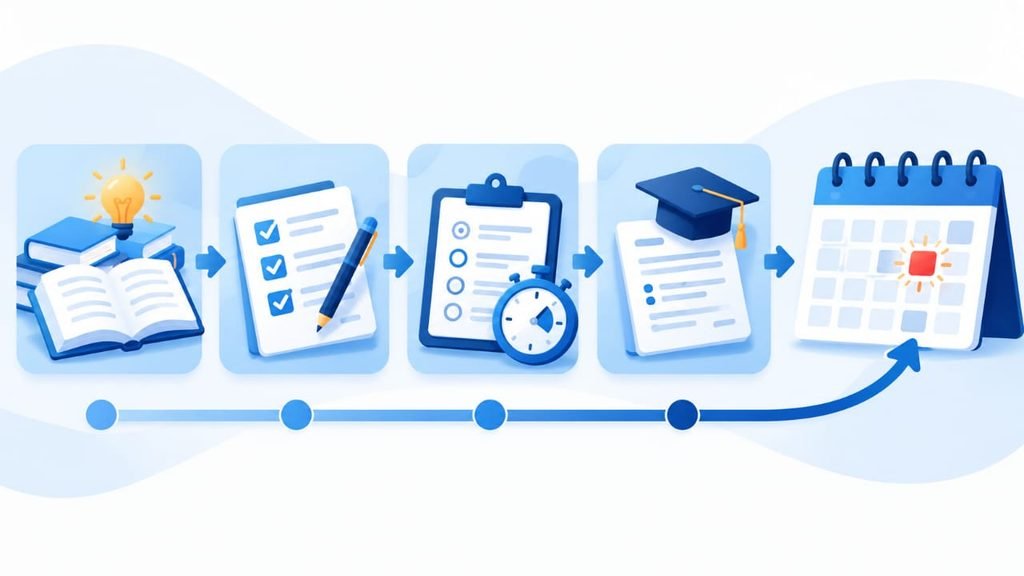
The exam prep tool is arguably Astra’s most useful feature, and it feels very different from ordinary question-and-answer chat.
It looks at your uploaded material and your exam date, then builds a plan for practice and revision. Not everything gets equal time. In most cases you’ll spend longer on the topics you know least.
Set your exam date
The date lets Astra fit the plan to the time you have. Two weeks of preparation is a very different job from a one-day cram.
A sample two-week plan might look like this:
Days 1–4: study the core concepts
Days 5–8: practice and work on weak points
Days 9–11: repetition and mixed quizzes
Days 12–13: full-length mock exams
Day 14: light revision before the exam
Test yourself and repeat
Mock exams and oral practice are essential. They show where your gaps are and whether you can recall things under pressure. Quizzes, repetition, and knowledge-gap modes keep the information active in your memory. Try to test yourself without looking at your notes. If you score well on open-book quizzes but poorly on practice exams, put more of your time into the exams.
Is Astra AI Free? Pricing in 2026
Astra AI has a free plan, but it’s limited, and paid plans unlock more. There’s no lifetime option, so paid features only last until your billing period ends. Looking at the details on the company’s website, you can estimate whether a plan is worth it for you.
The free plan suits light users. If you only need help with one tough algebra question now and then, a paid plan isn’t worth it. Heavier users who rely on the app throughout exam season will probably get far more from a subscription.
Teachers and professors can contact Astra separately to ask for a free year of Plus. The offer applies to educators who complete the activation email, which is a nice, no-pressure way to try the teaching tools.
The Plus plan costs €24 per month or €120 per year. Prices can differ by country and by how you subscribe, so work out your average monthly cost and compare it with your budget. For example, €120 per year comes to about €10 a month, which could be good value for some students.
Alternatives
Depending on what you need, another tool may suit you better. Here are some options, grouped by how closely they match Astra’s features.
ChatGPT
ChatGPT is a general-purpose assistant that works in many situations. It can explain concepts in depth, brainstorm ideas, and help with essays and reports. A student can ask it for an explanation, some practice questions, or a simpler version of a difficult text. The catch is that it doesn’t come with a study plan, so you have to create one from your materials and the time you have left.
Khanmigo
Khanmigo is designed around Khan Academy’s resources, so it works alongside the lessons and practice tests already on that site. You might get tutoring help while working through algebra there. On the downside, not every subject is covered, and you’d depend on one platform for both theory and practice.
Photomath
If math is your main struggle, Photomath is a solid pick. You snap a photo of a problem and get a step-by-step solution, which is useful for practice. It only handles math, though, so other subjects need another tool.
Quizlet
When memorization is the goal, Quizlet lets you create or find flashcards for whatever you need to learn word for word, such as vocabulary and definitions. It doesn’t offer planning or exam prep tools, so you’d need to combine it with other apps for a complete study plan.
Rather than comparing every option, ask yourself what you need most: a general assistant for any subject, a specialist for one skill like math, or a product that builds a full study plan from your own materials.
Mistakes to Avoid
Like most productivity tools, Astra can be misused. Watch out for these:
Treating the tutor like an answer key. Copying solutions without practicing recall won’t get you far. Ask for explanations, then try to retrieve the information from memory yourself.
Uploading every document you have. If the exam is a week away, narrow your materials to the topics that matter.
Never questioning the AI. If the tutor says something that contradicts your notes, books, or lectures, find out which is right. When in doubt, ask for clarification.
Leaving practice until the last minute. Estimate how much time you need and plan ahead instead of underestimating the workload.
Frequently Asked Questions (FAQs)
Conclusion
Astra AI is a study platform for students who struggle to organize what they need to learn. Its strongest features are the AI tutor and the exam prep workflow, along with practice tests, flashcards, mock exams, quizzes, repetition, and knowledge-gap practice. These really help when you have a clear goal and a deadline, and casual chatbot-style practice isn’t enough.
Even so, Astra AI is just a tool. It can’t replace solid practice, support from teachers, and careful research. The free plan is a good way to try the service, but heavy users should decide whether the subscription is worth the extra cost.
My advice: start with the free plan on a small task, see how much you really use it, and compare it with the alternatives above. Don’t judge it by the advertising. Try it on your own materials and check whether you understand and remember the explanations, then decide if a subscription earns its place.





One Comment